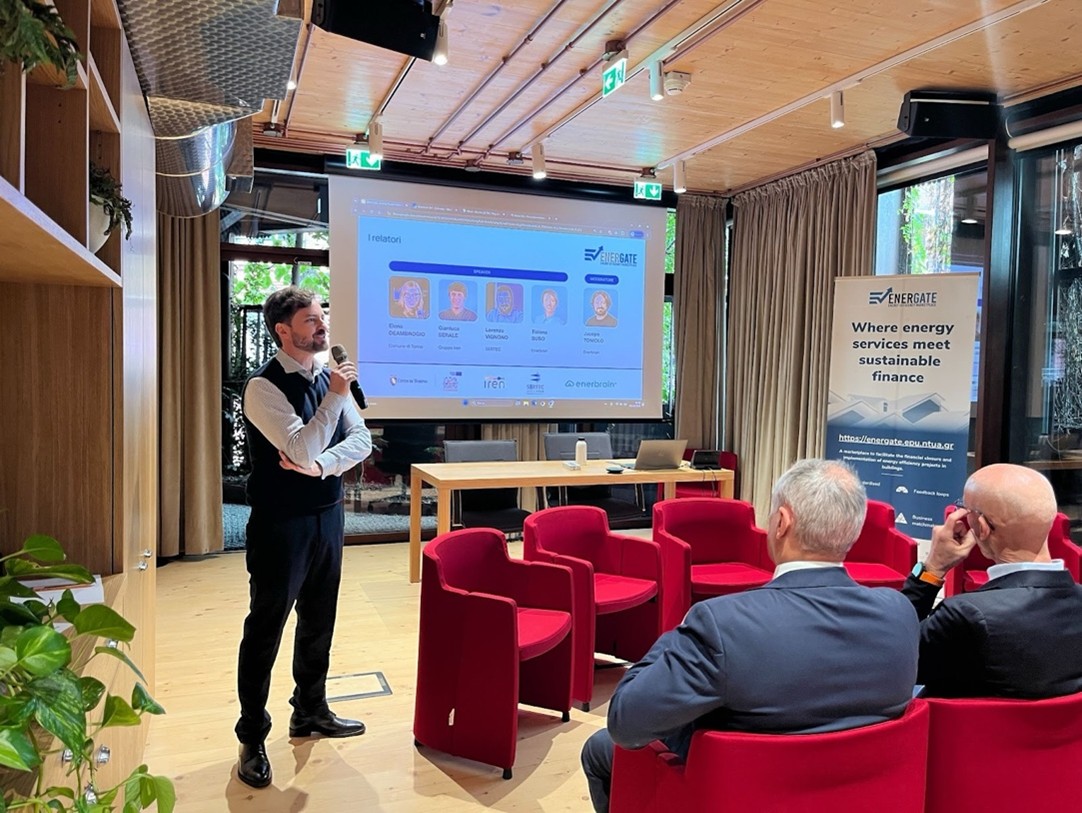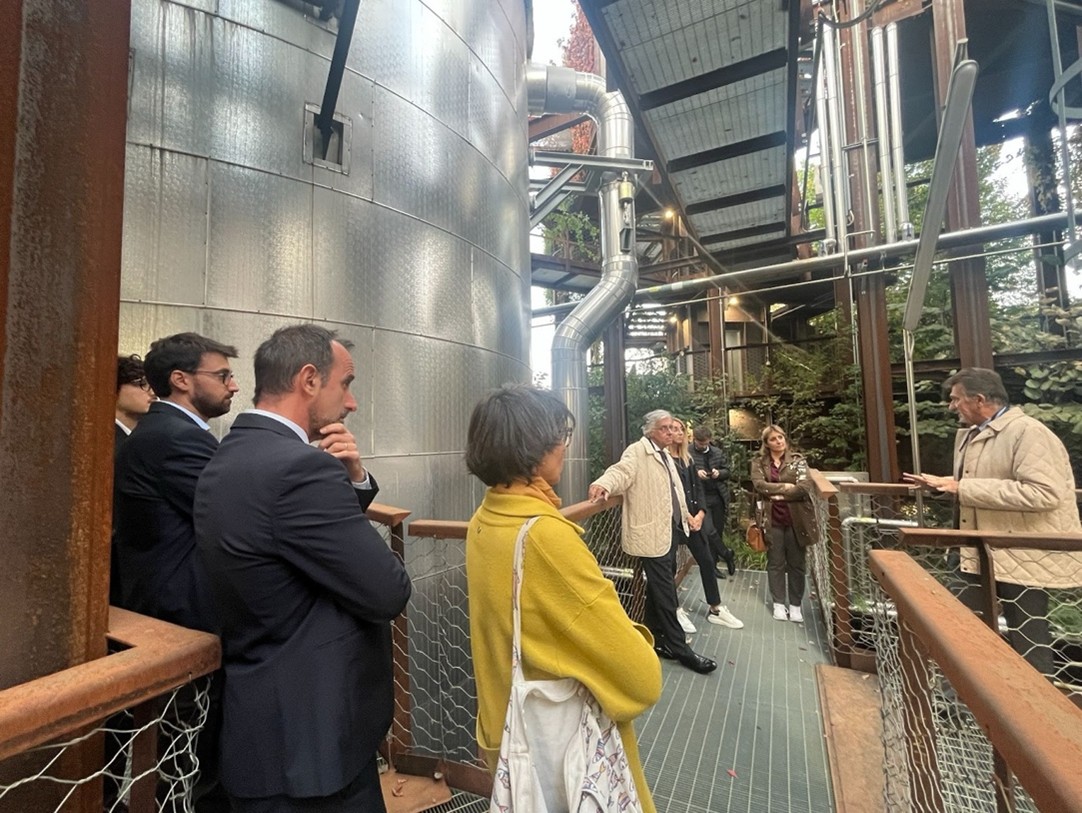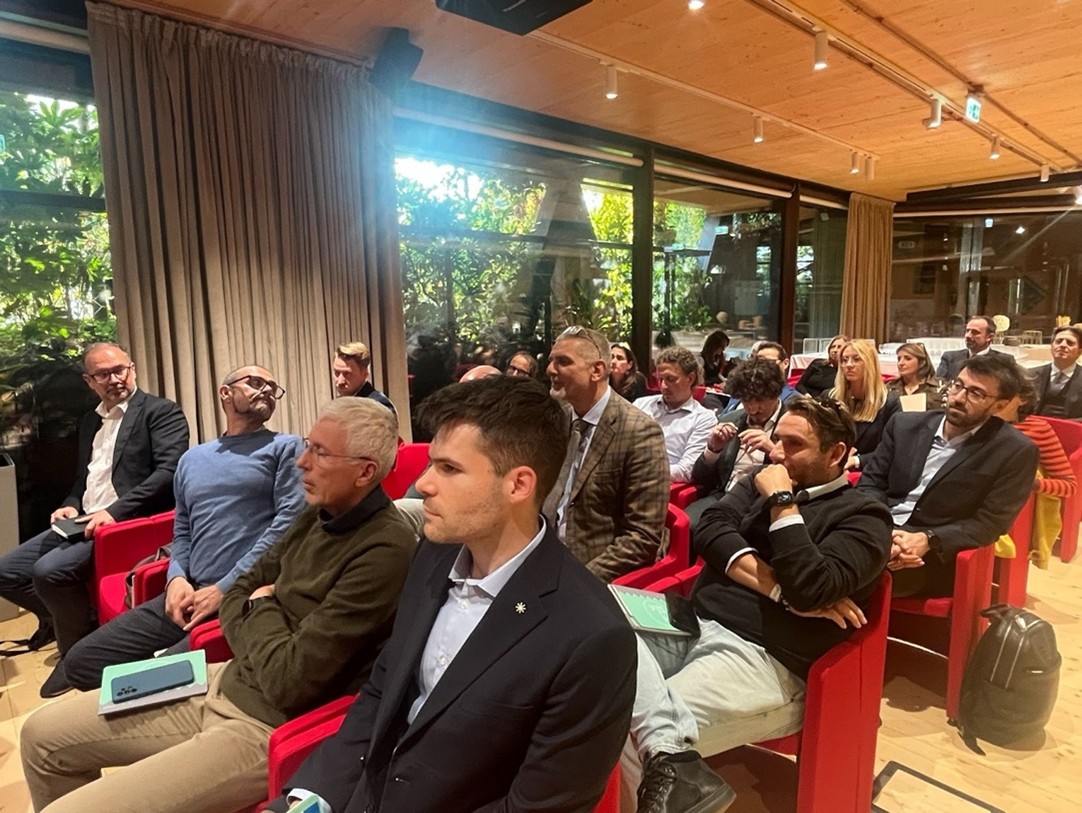
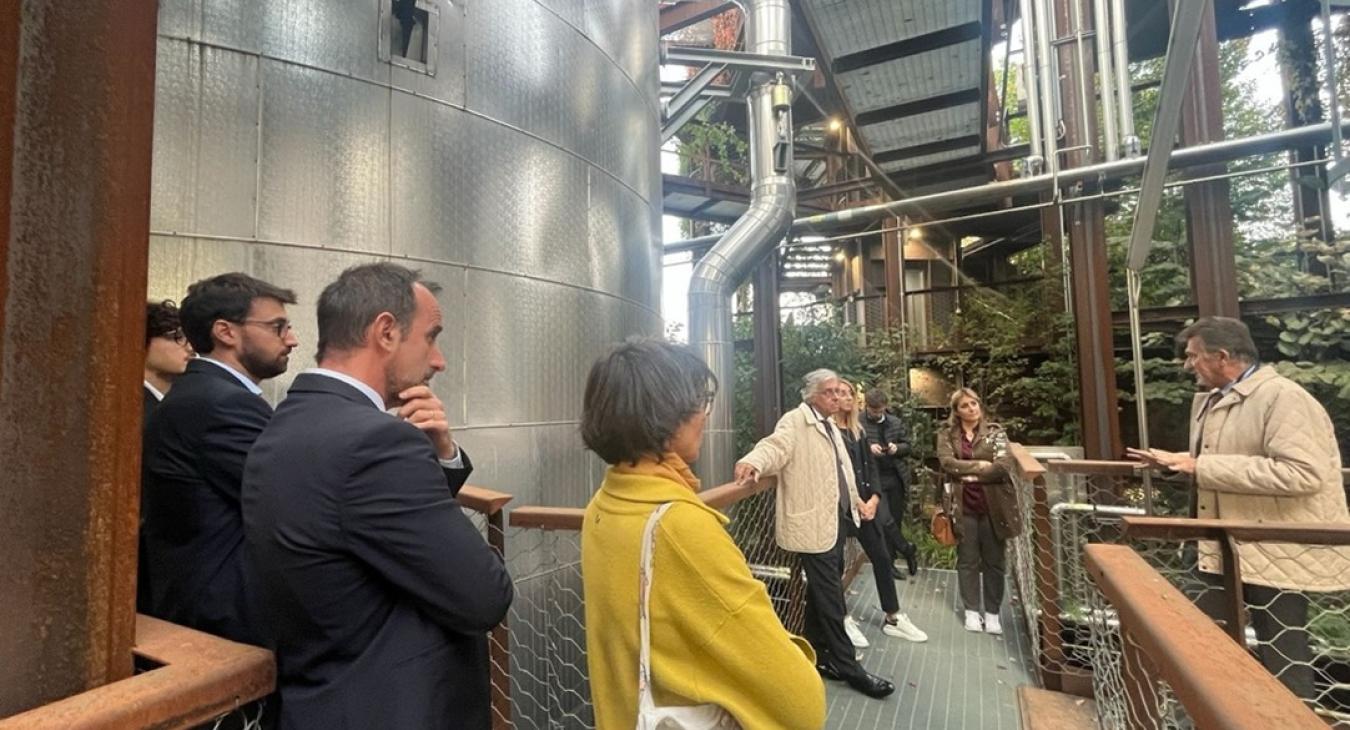
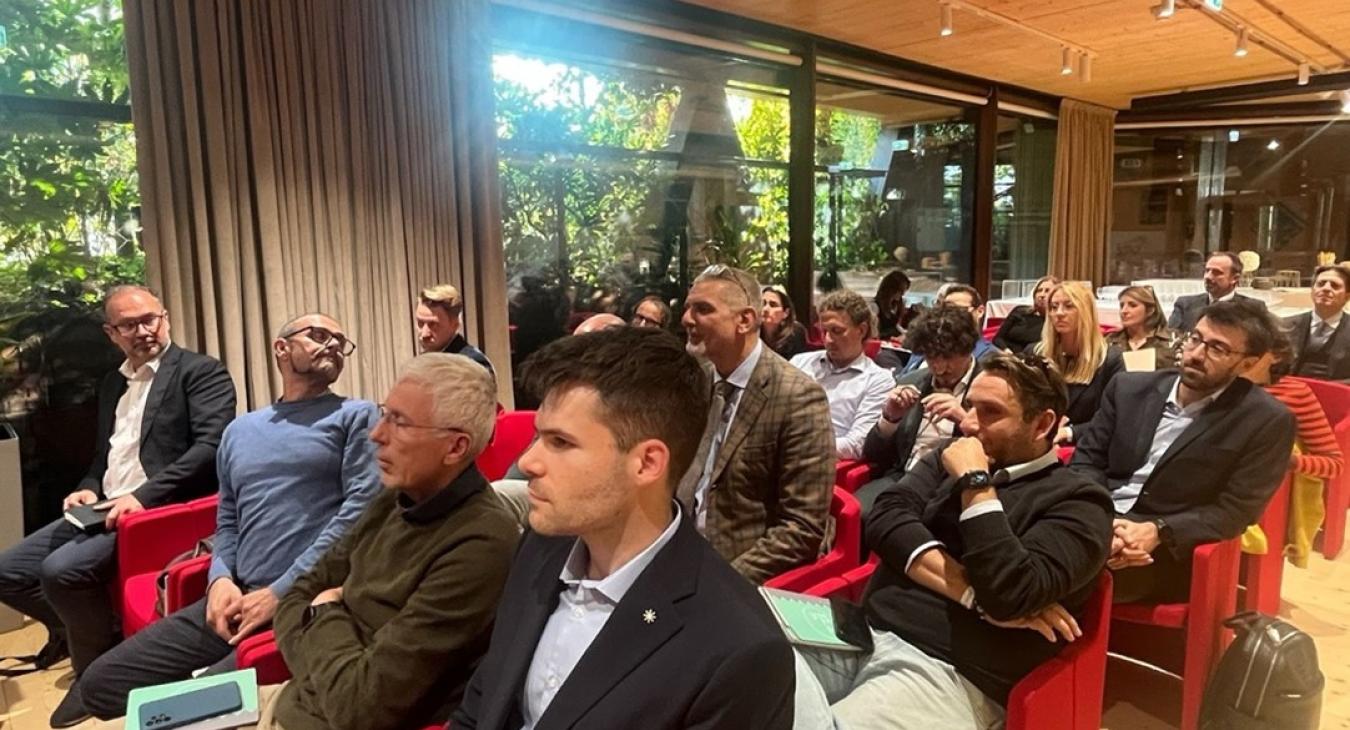
The Italian Stakeholder Event took place on 22 October 2025 at The Heat Garden in Turin, organised by Enerbrain with the participation of ENERGATE partners and leading sector representatives. The meeting brought together building owners, public authorities, technology providers, financiers, and innovation stakeholders to deepen the discussion on energy-efficiency renovation, platform-supported matchmaking, and financing mechanisms for sustainable buildings.
During the event, ENERGATE partners presented the final version of the ENERGATE Platform, engaged with users on their practical experience, and explored how innovative tools and digital approaches can accelerate investment decisions in Italy’s renovation market.
Key takeaways from the Italian pilot
Platform usability and early-stage maturity
Participants recognised the potential of ENERGATE as a digital marketplace but considered the platform still demanding for new users, especially concerning data entry and navigation. Simplifying the user experience, improving guidance, and offering onboarding in Italian were highlighted as crucial steps to increase engagement and complete project information. Integrating automated templates, guided data-entry, or connections to national databases (e.g. ENEA, GSE) could substantially reduce user effort.
Financial barriers and investment reluctance
A recurring challenge in the Italian market is the hesitation of financial institutions and companies to invest in non-core activities, such as energy efficiency, especially when payback periods are long or benefits indirect. Stakeholders stressed the need for transparent, comparable performance data and for showcasing real case studies to build confidence. ENERGATE could support this by offering benchmarking tools, illustrating profitability scenarios, and promoting success stories.
Fragmentation between design, execution, and operation
The Italian construction and public procurement system often separates project design, execution, and facility management. This disconnect leads to efficiency losses and weaker post-installation performance. ENERGATE was seen as a potential enabler for lifecycle approaches—linking designers, operators, and technology providers and helping translate design intentions into operational outcomes. Future evolution may include BIM integration, digital-twin functions, or shared performance dashboards.
Digitalisation, data use, and standardisation
Stakeholders agreed that availability of data is not the main issue—rather, the capacity to interpret and use data effectively remains limited. ENERGATE’s structured information framework may help standardise KPIs, improve transparency, and support European-level comparability across renovation projects.
Flexibility services and smart energy systems
Participants discussed the rising importance of digital controls, demand-response capabilities, and the integration of buildings into flexibility markets. ENERGATE could gradually extend its scope to include tools supporting building-grid interaction, enabling buildings to become active contributors to local energy systems.
Lessons learned and opportunities
The event demonstrated Italy’s strong potential for renovation but also the need for continuous adaptation of tools to national contexts. Stakeholders highlighted opportunities for:
- stronger alignment with financing schemes and incentives;
- improved performance transparency and communication;
- integration with monitoring and digital tools already used by industry;
- greater support for project preparation and decision-making.
Recommendations for platform enhancement
Based on stakeholder insights, the following improvements would boost ENERGATE’s relevance and usability in Italy:
- Simplify registration, onboarding, and data entry to make the platform intuitive and accessible for all user categories.
- Enhance visibility and engagement by enabling stronger interaction among public authorities, technology providers, ESCOs, designers, and investors.
- Improve communication of environmental and economic benefits through more case studies and best-practice sharing.
- Strengthen collaboration with municipalities and national initiatives to align with Italy’s climate and energy strategies.
- Integrate clearer guidance on financing options, incentives, and investment performance.
- Support lifecycle-based project management and closer integration between design, implementation, and facility management.
- Develop additional digital features such as dashboards, KPI benchmarks, automated data extraction, or links to Italian databases.
- Incorporate tools that facilitate participation in flexibility markets and smart-system integration.